Scars Can Be Improved. Do Not Let Them Get You Down.
Shine Dermatology is helmed by experienced and committed dermatologists with years of medical experiences in London and Singapore.
Scars can occur from many types of injury to the skin. Although nothing can restore the skin to its original perfection, there are many techniques available to soften the appearance of scarring. In addition, treatments can be given to reduce the itch, pain and tightness that can be associated with some scars.
Different Types of Scars
Acne scars – injections, Microneedling Radiofrequency, VBEAM, Picoway or fractional laser resurfacing may be used to improve acne scarring.
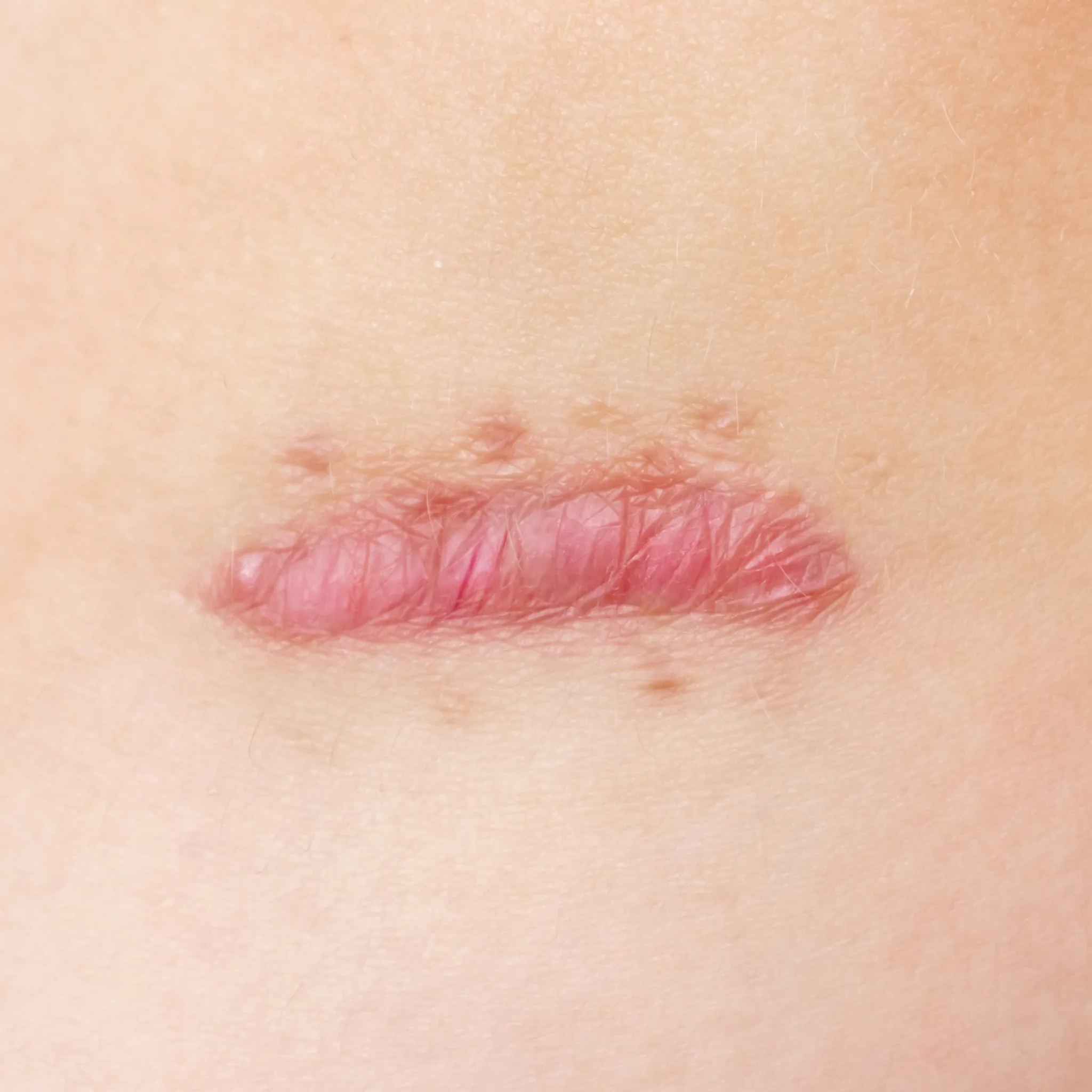
Keloid or hypertrophic scars – Silicone gels are the first line treatment of any scars. Disfiguring raised scars can be treated with steroid injections to soften and flatten. Vascular or Picoway lasers combined with steroid injections are often used to achieve even better results. In patients with earlobe keloids, CO2 laser and steroid injections can be used in combination to improve its appearance.
Depressed scars – fractional laser resurfacing can be used to improve the appearance of depressed scars by stimulating new collagen formation. The Fractional CO2 laser can also be combined with subcision, bio-stimulators and injectables to resurface, restore and repair your skin.
Scar Management
Common strategies for scar management include:
Topicals - Silicone based products are recommended as the first line therapy for prevention or treatment of abnormal scars. These can be applied once the wound has healed, aiming for 24 hours coverage and maintained for 2-3 months. It is most important to keep scars hydrated and stabilized in the early weeks.
Intralesional Injections – For cases where the scar is symptomatic or raised, monthly injections of steroids into the scar can be performed. Based on the thickness and response of your scar, your dermatologist will choose the appropriate concentration of corticosteroid for treatment.
Laser therapy – Pulsed dye laser (PDL) can be used for the treatment of red and raised scars, reducing the degree of redness and softening the scar. Repeated treatments every 4-6 weeks is recommended. PIcoway laser are effective for the treatment of brown scars which are often seen in Asians as part of the normal skin healing process. Fractional lasers are often used for depressed or atrophic scars eg acne scarring. These aim to stimulate new collagen formation to fill in the depressions and reduce the depth of the scar borders. Our fractional laser is gentle yet effective, and we aim to deliver good results with minimal downtime. A series of 4-6 treatments every month is recommended.
Combination laser and intralesional injections – Simultaneously treating scars with corticosteroid injections and pulsed dye or picosecond laser can lead to even better results – softening, flattening and fading the scar all in the one treatment. Repeated treatments are recommended every month.
Excision, steroid and pressure therapy – Large keloid scars eg earlobe keloids, can first be removed and contoured using a CO2 laser, followed by monthly intralesional steroids injections and daily pressure therapy. This reduces the risk of recurrence and aims for the best possible result.
Treat surgical scars EARLY – Every surgery results in a scar. Scars in high risk areas e.g. on the chest, neck, back and jaw can result in raised keloid scars, especially in Asians. Studies have increasingly supported the treatment of surgical scars early, rather than later, for a better final outcome. Pulsed dye laser, picosecond laser and fractional lasers have all been used to treat surgical scar sites and traumatic wounds early to improve the quality of scarring and prevent excessive scar formation.

Scientific Publications Related to Scars
Our dermatologists have always had a deep interest in the management of scars, resulting in collaborative studies with eminent Hong Kong dermatologists and the publication of several articles in scientific journals.
- Chan NP, Ho SG, Yeung CK, Shek SY, Chan HH. Fractional ablative carbon dioxide laser resurfacing for skin rejuvenation and acne scars in Asians. Lasers Surg Med 2010 Nov; 42(9): 615-23
- Chan NP, Ho SG, Yeung CK, Shek SY, Chan HH. The use of non-ablative fractional resurfacing in Asian acne scar patients. Lasers Surg Med 2010 Dec; 42(10): 870-5
- Ho SG, Yeung CK, Chan NP, Shek SY, Kono T, Chan HH. A retrospective analysis of the management of acne post-inflammatory hyperpigmentation using topical treatment, laser treatment or combination topical and laser treatments in Oriental patients. Lasers in Surgery and Medicine 2011 Jan; 43(1): 1-7
As seen on